The ontologyyour AI runs on.
Tacit models your company’s data, rules, processes and actions in one place, so every person and every AI agent works from the same reality.
A digital twinof your business.
Your ontology holds your data, rules and actions in one place, checked before anyone relies on them, so people and AI get the same answer.
What does an ontology capture?
01Data
Connect every system once.
ERP, CRM, documents and spreadsheets become one connected picture of your business.
02Logic
Write the rules down.
What counts as a late order or a good margin is defined once and checked before anyone relies on it.
03Actions
Let AI act, with approval.
Actions run through approvals and are written back to your systems, like SAP.
04Governance
Govern people and agents alike.
The same permissions apply to every person and every AI agent.
Running on Tacit today
591objects
41processes
68versions
38systems
Put your ontologyto work.
Every app runs on the same model of your company, so answers agree and actions follow your rules.
Ask in plain words and get the answer from your own data, with every step shown.
Book a callSee where your team’s time goes, find the repetitive work, and let AI take it over.
Your ontology gives every agent its context: data, rules, approvals and processes. Your developers build the rest in Claude, Cursor or Copilot.
The spec writes itself from what the ontology knows, then ships into your product.
They notice what needs attention and set the right actions going across your tools; a person approves what matters.
An ontology does more than power AI.
Once your company is written down, it pays off in places you might not expect.
Company brain
What people know stays when they leave.
Fact check
Every number traced to its definition and source before it reaches a board deck.
Compliance map
Each regulation linked to the processes it governs.
Due diligence
Hand investors or acquirers the model, not a round of interviews.
Onboarding
New joiners read how the company really works, instead of asking around.
Audit prep
Show auditors how every number was made.
Change impact
See what breaks before you change a process.
Post-merger integration
Map two companies onto one model.
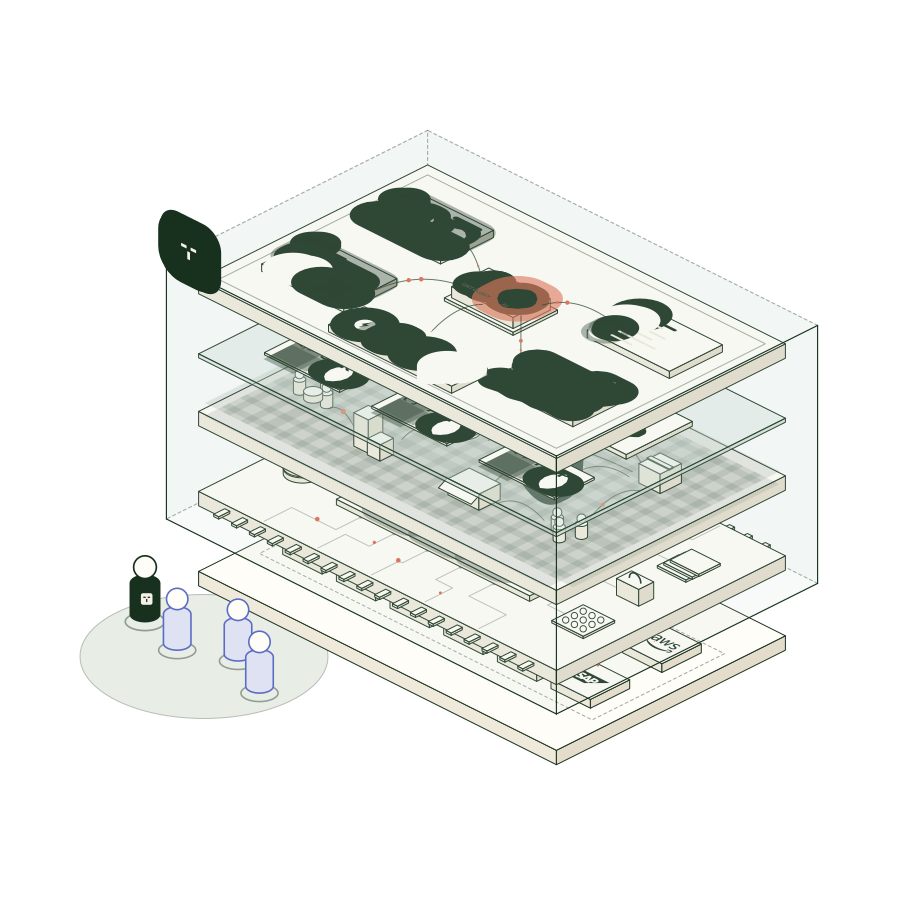
- Underneath
- Your systems stay.Nothing to rip out: Tacit reads from SAP, Salesforce, HubSpot or Postgres and writes back.
- On top
- Any AI plugs in.Claude, ChatGPT, Copilot or your own agents, all through MCP.
- Your data
- Customer data stays put.The ontology knows what a customer is, never who your customers are.
- Every change
- Nothing changes without a person.Each edit is checked automatically and approved by someone; every version is kept.
We come with engineers,not a login.
They work on site with your team, one business area at a time, until your people run it themselves.
Model one business area
- Pick the area together
- Build its ontology with your team
- Connect its systems
Prove it
- First agents and AI workflows
- Built with your team
- Tested on real work
Scale it
- Roll out to more teams
- Model the remaining areas
- Train your people to work with AI
Go end to end
- Agents that span systems
- Whole processes, not single steps
- Governance on every change
Let every team build
- Teams build their own agents
- One shared model underneath
- Our engineers step back
Fully yours
- Your team runs and extends it
- We stay on call
- The model keeps improving
We would rather be in the roomthan in your ticket queue.
Regular SaaS products
- You buy seats.
- You read the docs alone.
- You set it up yourself.
- Stuck? You file a ticket and wait.
Success meansPeople log in.
Tacit (SaaS + FDE)
- An engineer sits with you from day one.
- We learn your processes where they happen.
- We build it with your teams, not for them.
- Questions get answered in the room.
Success meansAn agent in production, run by your people.
Built by a boutique team in Berlin that has worked at




Does your AI know your business?Let’s create your first ontology.
tacit/ˈtæs.ɪt/ adjective
Known by doing, hard to put into words.
As the model fills in, your metrics turn from red to green.
- The steps, in order.
- Who signs off above €50.
- When a refund is done.
- Which customers to trust.
- When to bend the rule.
- Where money needs a second look.
- Who is about to leave.
- What’s really behind a spike.
- Who may decide: person or agent.